
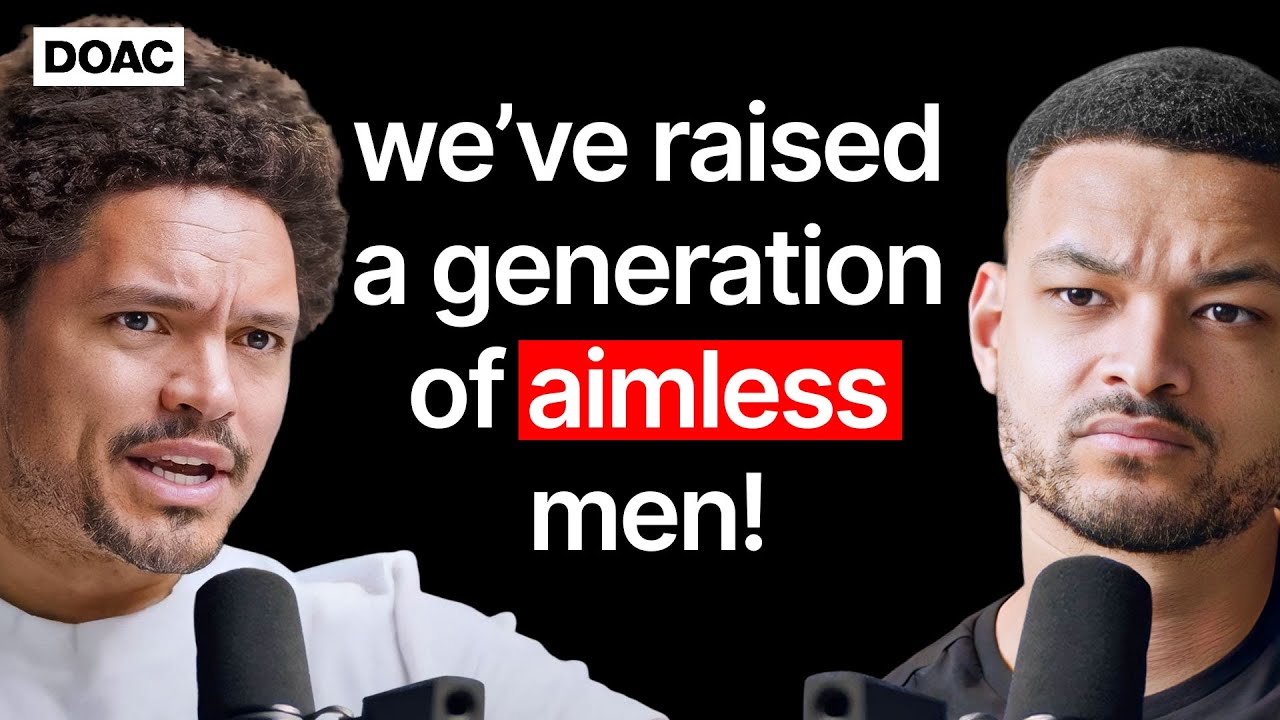
Trevor Noah: My Depression Was Linked To ADHD! Why I Left The Daily Show
The Journey of Self-Discovery: Trevor Noah Opens Up About Mental Health and Life Choices
In a deeply personal and revealing conversation on The Diary Of A CEO podcast, Trevor Noah, the former host of The Daily Show, opens up about his struggles with depression, ADHD, and the profound life experiences that shaped him. From his unique childhood in apartheid South Africa to his decision to leave one of television's most coveted positions, Noah's story is one of resilience, self-discovery, and the pursuit of genuine happiness.
Born Into Complexity: Trevor's Early Years
Trevor Noah was born in 1984 in South Africa, six years before apartheid ended. His very existence was considered illegal - born to a Black mother and a white Swiss father at a time when interracial relationships were prohibited. 'I was born to a black mother and a white father in South Africa at a time when it was illegal in the country,' Noah explains, highlighting the complex racial dynamics that defined his early life.
Under the apartheid system, Noah couldn't live with his father, and his mother had to pretend to be his nanny when they were in public together. His grandmother would lock him in the house, fearing the police might take him away if they found him playing outside in Soweto, a township designated for Black people only.
'They were scared the police were going to take me away,' Noah recalls, describing how his grandmother would keep him indoors for his safety. Despite these restrictions, Noah didn't fully comprehend the abnormality of his situation as a child. 'A child's reality for the most part is defined and created by their parents or their caregivers,' he reflects.
The Trauma That Changed Everything
One of the most harrowing chapters in Noah's life came when his mother was shot by his stepfather. Noah, then in his twenties, received a call from his younger brother informing him that their mother had been shot in the head.
'I knew exactly who did it. I knew what had happened,' Noah says, explaining how growing up in a household with domestic abuse had made him hyper-sensitive to danger signs. This traumatic event left an indelible mark on Noah's life, though miraculously, his mother survived.
'The bullet entered the back of her skull, went through her head, and then exited... it basically missed the bottom of the brain,' Noah explains. The doctors called it a miracle, as the bullet had somehow avoided all vital areas.
This near-tragedy fundamentally changed Noah's relationship with his mother: 'From that day onwards, I have never seen my mother the same way... every time I look at her, I'm grateful that she exists.'
The Hidden Cost of Domestic Violence
Growing up in a home with domestic violence had profound effects on Noah's development. He describes developing a 'spidey sense' - an acute awareness of potential danger and other people's emotions.
'Children start to develop an acute sense... you hear the sound of a car and you know which car is bringing danger to the house,' he explains. 'I would know by the sounds of the footsteps whether or not my stepfather was sober or drunk.'
This hyperawareness became both a gift and a curse. While it helped him navigate dangerous situations and may have contributed to his success as a comedian, it also left him constantly on alert, unable to fully relax.
'I exist in a space where I am too aware of how other people feel,' Noah admits. 'Your nervous system doesn't rest.'
The Depression-ADHD Connection
In one of the most revealing moments of the interview, Noah discusses how his depression was actually linked to untreated ADHD. 'I didn't realize that the depression that I was suffering from was untreated ADHD depression,' he shares.
This realization came after years of feeling purposeless and struggling with his mental health. 'It felt like life was meaningless. I would think to myself, I hate this, this sucks, I don't know what I want to do with life anymore, and that's sometimes where the depression would kick in.'
Noah's experience highlights the often-overlooked connection between ADHD and depression, particularly when the ADHD goes undiagnosed or untreated. His openness about this struggle offers valuable insight for others who might be experiencing similar symptoms.
The Daily Show: Success and Sacrifice
When Noah first took over as host of The Daily Show, the transition wasn't smooth. 'It was absolutely terrible,' he admits. 'People would just be like, 'Go back to where you came from.' Death threats. It was really hard.'
Despite the initial challenges, Noah persevered, working tirelessly to make the show his own. 'I would get home at 9:00 p.m., work until midnight, get back to the office at 7 the next day, and do it all over again.'
The show eventually became a success under his stewardship, but the cost was high. 'I had made my life about work, and I had made everything else secondary,' Noah reflects. This realization would eventually lead to his decision to leave the show after seven successful years.
The Crisis of Connection Among Men
Noah expresses deep concern about the state of young men in today's society, noting their increasing isolation and anger. 'One of the big things I've been worried about recently is young men and how angry they've become, how alone they've become, how isolated they've become.'
He attributes part of this crisis to men's difficulty in connecting emotionally without needing a 'third thing' - an activity or distraction that allows them to avoid direct emotional engagement.
'I don't know many guys who know how to just sit with their male friends and just be, not do a thing,' Noah observes. 'Guys always need the third thing. There's you, there's me, and there's the third thing.'
This inability to connect authentically, Noah suggests, contributes to the loneliness and purposelessness many young men experience. He advocates for creating safe spaces where men can be vulnerable without fear of judgment or ridicule.
Finding Purpose Beyond Work
One of the most profound shifts in Noah's life has been his reprioritization of friendship and connection over career success. 'I have made one of the determining factors of how I live my life, I think of it through the lens of friends first,' he explains.
This represents a significant change from his earlier mindset, when work dominated his schedule and decisions. Now, Noah structures his life around maintaining meaningful connections, recognizing that 'community is literally the most important thing in everybody's life.'
He likens friendships to 'little piggy banks' where both parties invest, and 'every now and again you get to break them open and enjoy what's inside.' This perspective has transformed how he measures success and fulfillment.
The Curse of Fame
Despite his public profile, Noah is candid about the downsides of fame, describing it as 'the curse of what I do.' He values privacy and anonymity, lamenting their loss as his public profile grew.
'People will never appreciate the beauty and the tranquility that comes with anonymity,' he reflects. 'The ability to write your story whenever you meet someone.'
Noah explains how fame restricts one's freedom and spontaneity, creating a fishbowl existence where private moments become public property. 'As my mom even puts it, you are now owned by the world,' he says, explaining why many celebrities become isolated and depressed.
Lessons for Finding Your Place
For those struggling to find their place in the world, Noah offers practical advice based on his own experience. Rather than focusing solely on finding people who accept you for who you are, he suggests focusing on activities you enjoy.
'What I found works wonders is finding things you enjoy, focus on finding things you enjoy... find the thing that you love,' he advises. Through shared interests and activities, authentic connections naturally develop.
Noah's journey from an 'outsider' in apartheid South Africa to a globally recognized figure offers hope and wisdom for anyone feeling like they don't belong. His message is clear: connection, purpose, and authenticity are the foundations of a fulfilling life.
The Decision to Leave The Daily Show
Though not explicitly detailed in this interview, Noah's decision to leave The Daily Show after seven successful years aligns perfectly with his evolved perspective on life priorities. Having recognized that he had 'made life about work' and 'everything else secondary,' his departure represents a conscious choice to realign his life with his values.
By prioritizing personal connections, mental health, and genuine fulfillment over career advancement, Noah exemplifies the courage to step away from success as conventionally defined to pursue a more balanced and meaningful existence.
Conclusion: A Life Redefined
Trevor Noah's candid conversation reveals a man who has journeyed from extraordinary circumstances to extraordinary success, only to discover that true fulfillment lies beyond professional achievements. His willingness to discuss mental health challenges, childhood trauma, and the pressures of fame offers valuable insights for anyone navigating their own path.
As Noah continues to evolve and redefine success on his own terms, his story serves as a powerful reminder that our greatest growth often comes through our greatest challenges. By sharing his experiences with depression, ADHD, and the search for belonging, he invites us all to examine our own lives and priorities with similar honesty and courage.
What aspects of Trevor Noah's journey resonated most with you? Have you experienced similar challenges in balancing work, mental health, and meaningful connections? Share your thoughts in the comments below.